
Updates, explainers, and practical guides.
Whether you are buying a home, checking ownership, handling an estate, researching a parcel, or preparing for a real estate transaction, knowing the difference can save you time and help you request the right information.

A current land title search can reveal much more than the registered owner's name. Depending on the province and property, it may show mortgages, liens, easements, rights-of-way, restrictive covenants, caveats, and other registered interests.
Knowing the difference matters when you are buying a home, researching a parcel, handling an estate, checking a potential investment, or simply trying to confirm who legally owns a property.
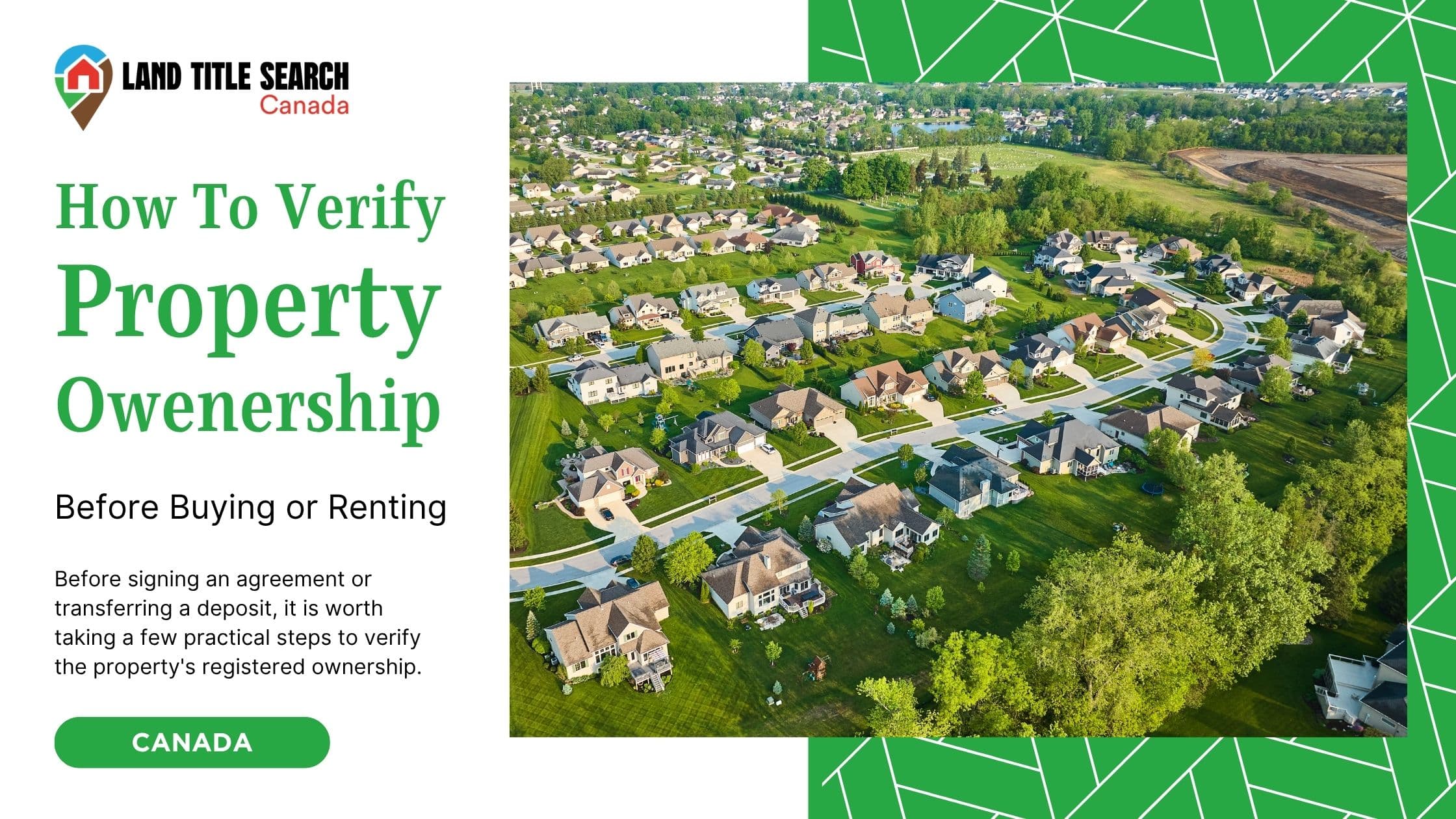
Before signing an agreement or transferring a deposit, it is worth taking a few practical steps to verify the property's registered ownership.

Finding what a property sold for in Canada is less about one magic website and more about knowing which door to knock on. Browsing apps will scratch the surface, but when accuracy matters, the official registry is where the truth lives.

Every parcel of land in the country has a paper trail behind it, and with the right approach, you can follow that trail straight to a name.
Let's break down what each document is, how they differ, and the moments when one matters more than the other.